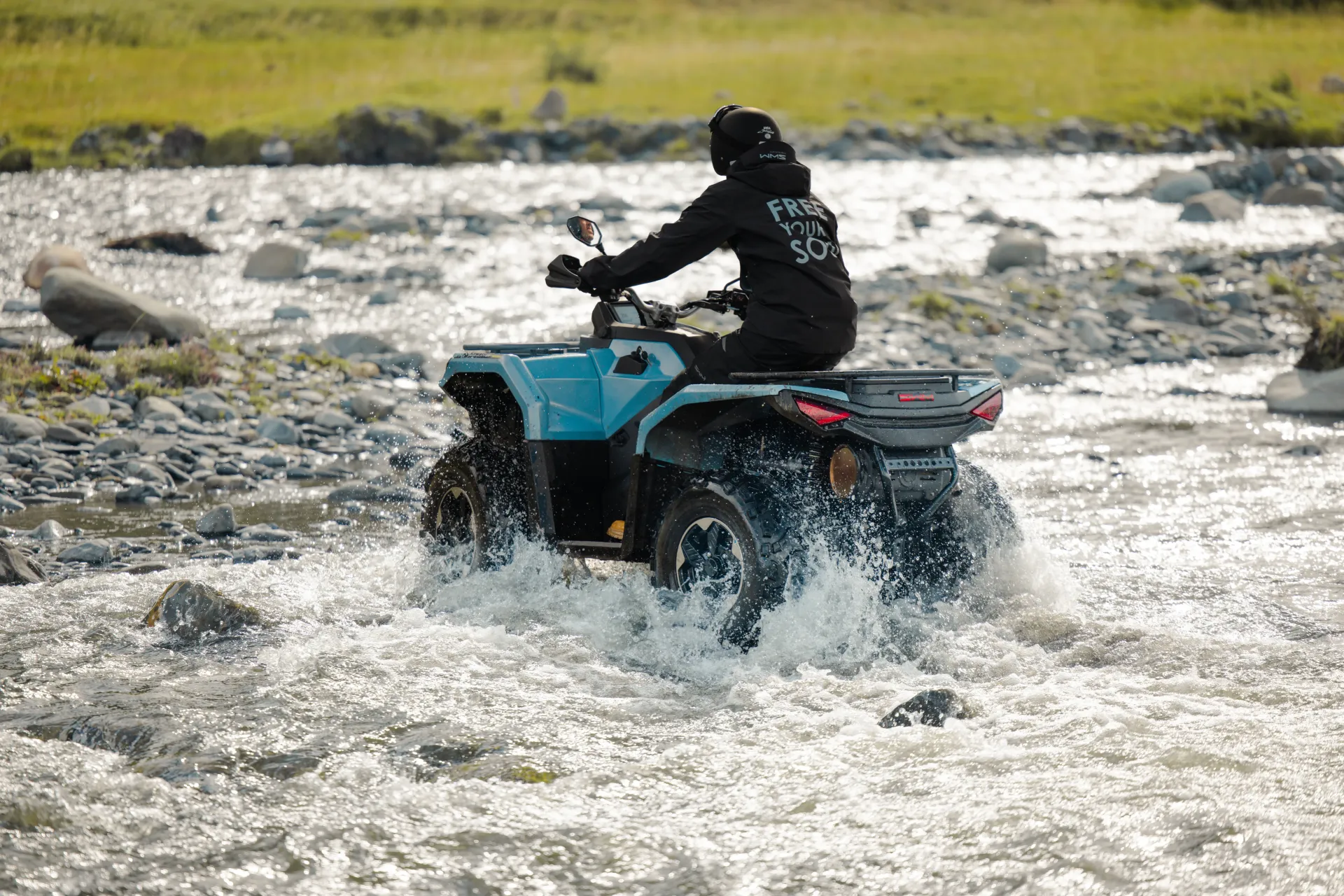
Electronic Power Steering in powersports applications has followed a rocky adoption curve. Early implementations felt like they were lifted from compact cars and recalibrated by engineers who’d never ridden a trail. Too much assist at speed. Too little at crawl. Dead spots on center. Lag between input and response. SWM 2026 models platforms and the Trailhunter ATV line have taken a different approach — one that starts from first principles rather than adapting an existing automotive module. The result is an EPS system that genuinely enhances the riding experience rather than merely adding a checkbox feature to the spec sheet.
The fundamental challenge of ATV steering is the conflict between two opposing requirements. At low speeds — crawling through rock gardens, maneuvering in tight spaces, negotiating technical obstacles — the rider needs maximum mechanical advantage with minimum physical effort. The forces acting on the steering system in these conditions are enormous: the front tires are clawing over irregular surfaces, scrub radius is working against every input, and tire pressures optimized for traction produce high steering resistance. A purely manual steering system under these conditions demands upper-body strength that fatigues even experienced riders within an hour. At high speeds, the requirement inverts completely. The rider needs weighted, communicative steering that provides feedback about surface conditions and resist unintended inputs from trail irregularities — light steering at 70 km/h on gravel is genuinely dangerous, as every rock and rut becomes a steering event.

| Speed Range | EPS Assist Level | Steering Feel | Primary Benefit |
|---|---|---|---|
| 0-15 km/h | Maximum (85% assist) | Ultra-light, fingertip effort | Fatigue elimination in technical terrain |
| 15-40 km/h | Moderate (50% assist) | Natural weight, connected feel | Trail feedback without arm pump |
| 40-70 km/h | Reduced (25% assist) | Weighted, stable, communicative | High-speed stability and precision |
| 70+ km/h | Minimal (10% assist) | Heavy, deliberate, planted | Maximum directional stability |
The SWM system achieves this speed-dependent assist curve through a torque-sensor-based architecture rather than the simpler position-sensor approach used in many budget implementations. A torque sensor measures the actual force the rider is applying to the steering column, then instructs the electric assist motor to multiply that force by a factor that varies with vehicle speed. The critical advantage of torque sensing is that the assist feels proportional — it amplifies your input rather than replacing it. When the system is working correctly, you feel like you’ve suddenly gotten stronger, not like a computer is steering for you. This distinction matters enormously for rider confidence on technical terrain where precise tire placement is critical.
The Trailhunter’s EPS unit is physically integrated into the steering column assembly rather than mounted remotely with a linkage, which reduces compliance — the mechanical slop that creates a vague on-center feel. The electric assist motor is a brushless DC unit drawing from the vehicle’s main electrical system, with a peak current draw of 35 amps under maximum assist conditions. SWM has programmed a thermal protection algorithm that progressively reduces assist if motor temperature exceeds 150°C, but in practice, this threshold is nearly impossible to reach under normal riding conditions — the motor’s duty cycle on a typical trail ride stays well within safe operating limits. The entire system adds approximately 3.2 kilograms to the vehicle’s curb weight, a penalty that SWM’s chassis engineers offset by relocating the battery to a more centralized position for improved mass distribution. For any rider who has spent a full day wrestling a non-EPS ATV through technical terrain, those 3.2 kilograms represent the single best weight gain on the entire vehicle.
The engineering challenge behind speed-sensitive EPS is deceptively simple to state and remarkably difficult to execute: provide maximum steering assistance at parking-lot speeds where resistance from tire scrub and steering geometry is highest, then progressively reduce assistance as speed increases to maintain steering feel and stability at highway velocities. The difficulty lies in the transition curve — the mapping between vehicle speed and assist level — because a poorly calibrated transition creates a sensation of the steering “going numb” or, conversely, “waking up” unpredictably as speed changes. SWM’s EPS calibration team spent over 2,000 hours of on-vehicle testing across five continents to develop the assist curve used in the current Trailhunter platform. The curve uses vehicle speed as the primary input but also factors in steering angle rate — how quickly the driver is turning the wheel — to differentiate between a gentle lane change at highway speed (where assist should remain low for stability) and an emergency swerve at the same speed (where assist should momentarily increase to help the driver complete the maneuver). This dual-input logic required a steering angle sensor with ten times the resolution of the sensor used in the previous-generation EPS system, adding approximately $18 to the bill of materials — a cost that SWM absorbed rather than passing through to the consumer. The SWM 2026 models will extend this dual-input EPS logic to the Nomader platform, addressing the unique steering challenges of a heavier vehicle with a longer wheelbase.