Magnetic stirrers, particularly those with hotplate functionality, are essential tools in laboratories for mixing and heating samples. Two advanced features—speed ramping and ramp heating—offer significant advantages, enhancing safety, efficiency, and sample integrity. This article explores the benefits of these features and their applications in laboratory settings.
Speed Ramping
Speed ramping allows for a gradual increase in stirring speed, preventing sudden splashing or decoupling of the magnetic stir bar. Splashing can lead to sample loss or contamination, especially when working with corrosive materials. Decoupling, or spin-out, occurs when the stir bar loses synchronization with the magnetic field, halting the mixing process. Speed ramping mitigates these issues by ensuring a smooth and controlled acceleration.
Many modern stirrers, such as the Troemner Professional Round Top Hotplate Stirrers and Jeio Tech MS Magnetic Stirrers, come equipped with speed ramping functionality. This feature is particularly useful for sensitive applications where precision and control are paramount.
Ramp Heating
Ramp heating gradually increases the temperature of the hotplate, preventing thermal shock. Thermal shock occurs when different parts of a material expand unevenly due to rapid heating, potentially causing cracks in ceramic hotplates or glass vessels. Ramp heating ensures a controlled temperature increase, safeguarding both the equipment and the sample.
Some models, like the Jeio Tech TS Advanced Hotplate Stirrers, offer customizable ramp heating settings, allowing users to define the rate of temperature increase. For more advanced control, thermoregulators such as the VTF EVO Vertex Digital Thermoregulator can be integrated with hotplate stirrers. These devices provide real-time temperature monitoring and programmable heat ramping, enabling precise and automated control.
Using Thermoregulators for Ramp Heating
Thermoregulators like the VTF EVO Vertex offer enhanced temperature control, including programmable ramp heating. These devices wirelessly connect to a PC, allowing users to monitor and adjust temperature settings remotely. While thermoregulators are more expensive—ranging from $320 for basic models to $669 for advanced versions—they provide unparalleled accuracy and convenience.
Tip: For laboratories requiring precise temperature control, investing in a thermoregulator can significantly improve experimental outcomes and equipment longevity.
Manual Ramp Heating
If a thermoregulator is not within budget, manual ramp heating is a viable alternative. This involves gradually increasing the heat setting on the hotplate stirrer. While this method is less precise, it can be improved by using a temperature probe, such as the PT1000 RTD probe, which measures the sample’s actual temperature and adjusts the heat accordingly.
Some magnetic hotplate stirrers, like the Talboys Professional models, include temperature probes as standard or optional accessories. These probes ensure accurate temperature control, even when manually ramping heat.
Video Demonstration
For a practical overview of speed ramping and ramp heating, watch the following video:
Recommended Equipment
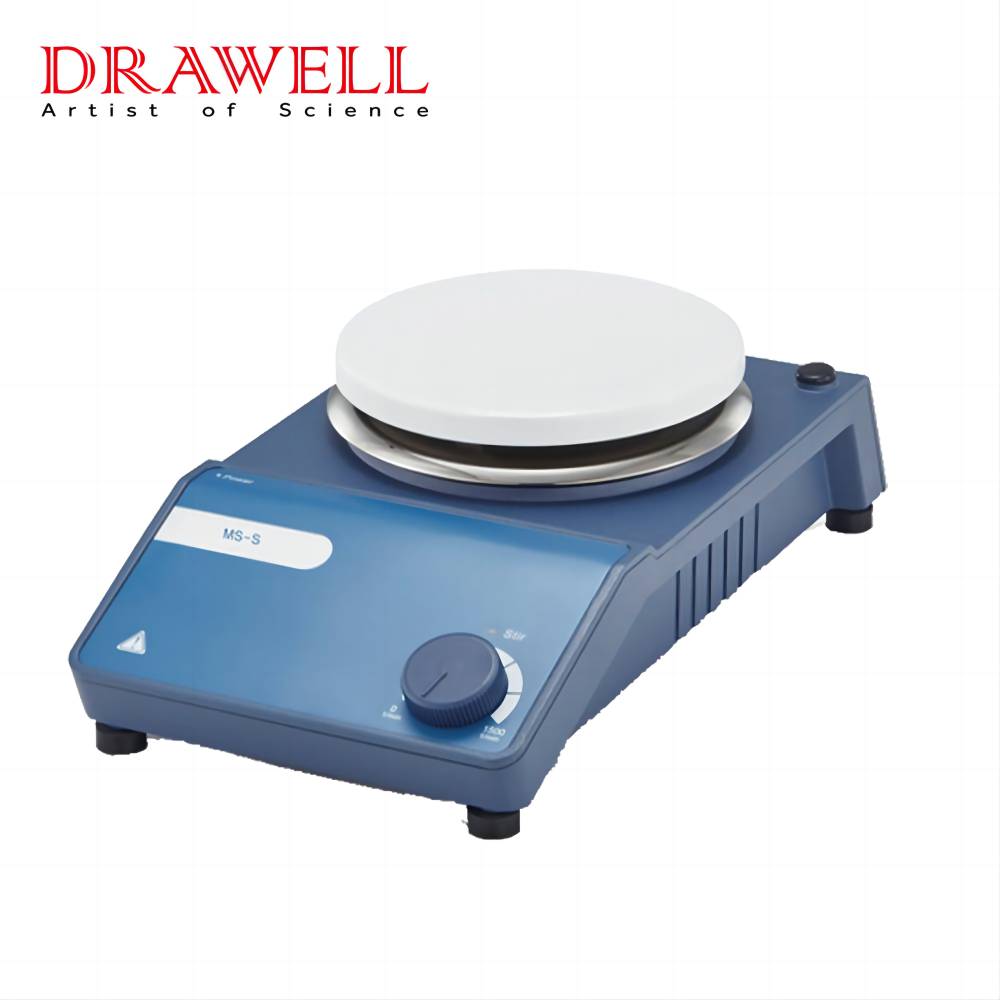
For laboratories seeking reliable and versatile stirrers, the Classic Magnetic Stirrer MS-S is an excellent choice. Its robust design and advanced features make it suitable for a wide range of applications.
Speed ramping and ramp heating are invaluable features for laboratory stirrers, offering enhanced safety, precision, and sample integrity. Whether using advanced thermoregulators or manual methods, these features ensure controlled and efficient mixing and heating processes. For more information on laboratory equipment, visit Wikidata’s entry on laboratory stirrers. By incorporating these techniques, laboratories can achieve consistent and reliable results in their experiments.